Nowhere Left to Run
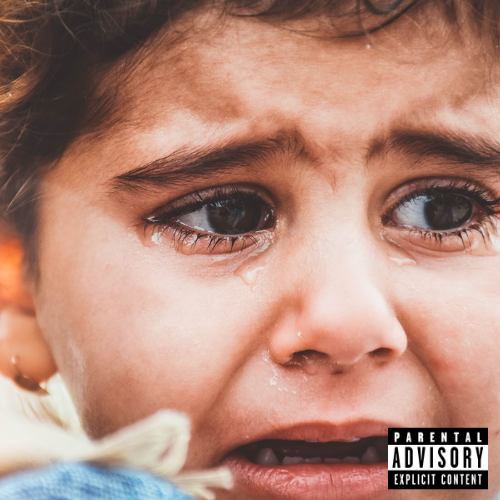
Credits: Zahra Amiri
The real picture is withheld due to personal reasons of the photojournalist.
Reporter: Hi, could you look into the camera here and tell us your name and your age?
Omar: Hi, I am Omar and I am 12 years old.
Reporter: Hello Omar, could you tell us whatever you remember about how you got to this camp?
Omar: It was 4 days ago, I could hear sirens going off since morning. They were screaming in my ears, my heart was beating really fast. The air smelled strange, like smoke and metal. As myself and my sister were having our lunch, one of our neighbors came running to our door and carried us out of the house. I remember seeing something huge falling from the sky and hitting our roof. The smell of grilled kebabs filled the house. That’s it. I don’t remember anything else. Then I woke up here.
Reporter: Oh, you have a sister too. How old is she?
Omar: She’s 10 years old. Her name is Yasmin. She’s very artsy. Our mom calls her “Tuhfah” (masterpiece).
Reporter: And where is your mother now?
Omar: You know that day she was in the kitchen making our favorite kebabs, that’s the last time I saw her.
Reporter: You didn’t ask your ʿamm (uncle) where your mom is?
Omar: I did and he told me that mama is also in a camp like this some place close by. I asked him when mama will come to see us, he told me she’ll come to see us next week. At first, I believed him. I wanted to believe him. But every night, when I lie down, I think… if mama could come, wouldn’t she already be here? I know ʿamm is lying to me. I know mama is with teta (grandma) now.
Reporter: Why do you say that?
Omar: Because in the evening when I play with Yasmin around the camp, I usually see big red trucks bringing water and clothes. I see the big words “Aṭfāl jarḥā, lā ʿāʾilah bāqiyah” (wounded children no surviving family - WCNSF) written on it. I was able to understand all the words except for one. I did not know what “Bāqiyah” (surviving) meant. Then I asked one of the older boys here what that word meant. He told me it meant “alive.”
Reporter: So are you the only one here to take care of your sister now?
Omar: My uncle and my aunt are also here. But at night only the two of us sleep together in the tent. You know at night we can’t sleep sometimes.
Reporter: Why? Is it the cold?
Omar: No, because of those things in the sky, the thing which hit our house. I would start trembling. My hands would tremble and start to hurt.
Reporter: What about your sister?
Omar: She’s the one who hugs me tightly and helps me sleep. She wraps her arms around me and tells me stories. She says everything will be okay. I don’t believe her, but I pretend I do, so she doesn’t get scared.
Reporter: Do you wish you could go back to your house?
Omar: Yeah, you know when I sleep too, I dream about our house. Last night I saw our mom in my dream. She was bringing out the kebabs from the kitchen and as she was about to serve it, I heard a huge BOOM and woke up. I don’t want to be brave. I just want to go home. I really wish the people who make the bombs would stop. I don’t know why they don’t stop.
Sometimes, I feel like a runaway, but I never ran away.
I was taken.
Explanatory Note :
This dialogue exchange draws inspiration from the literal title of the song Runaway by Aurora, paralleling the forced displacement of children in war-torn regions. In the song, Runaway conveys a longing for home, a place of safety and belonging that now feels unreachable. Similarly, Omar, the child in this exchange, speaks of being taken from his home, not as a choice but as a consequence of war. He struggles with the realization that he may have no home left to return to—mirroring the song’s theme of searching for something lost. The word runaway is woven into the dialogue to emphasize this tragic reality: while Omar never chose to run, he has still become a runaway in the eyes of the world, lost in the chaos of conflict.